
Stepping back into the dating world in your 40s here in Aotearoa can feel like walking into a familiar room where all the furniture has been rearranged. You are likely a very different person than you were in your early twenties. Back then, dating might have been driven by a frantic search for chemistry, a shared love for the same indie bands, or simply the excitement of the unknown. Now, after a couple of decades of navigating careers, perhaps raising tamariki, and weathering the ups and downs of previous long-term relationships, your lens on love has naturally shifted. It is not that the "spark" no longer matters—it is just that the spark now needs to be backed up by something a bit more sustainable, like a well-insulated home in a cold Kiwi winter.
In your 40s, life experience becomes your greatest asset. You have likely seen enough "red flags" to recognise them before they even unfurl, and you probably have a much clearer sense of your own boundaries. This decade is often defined by a shift from seeking "intensity" to seeking "consistency." You might find yourself less impressed by grand romantic gestures and more moved by someone who consistently shows up, communicates their intentions clearly, and respects your time. It’s a transition from looking for a co-star in a drama to looking for a reliable partner for the everyday adventures of life.
"Dating in your 40s isn't about finding someone to complete your life; it’s about finding someone who complements the full, busy, and beautiful life you’ve already built for yourself."
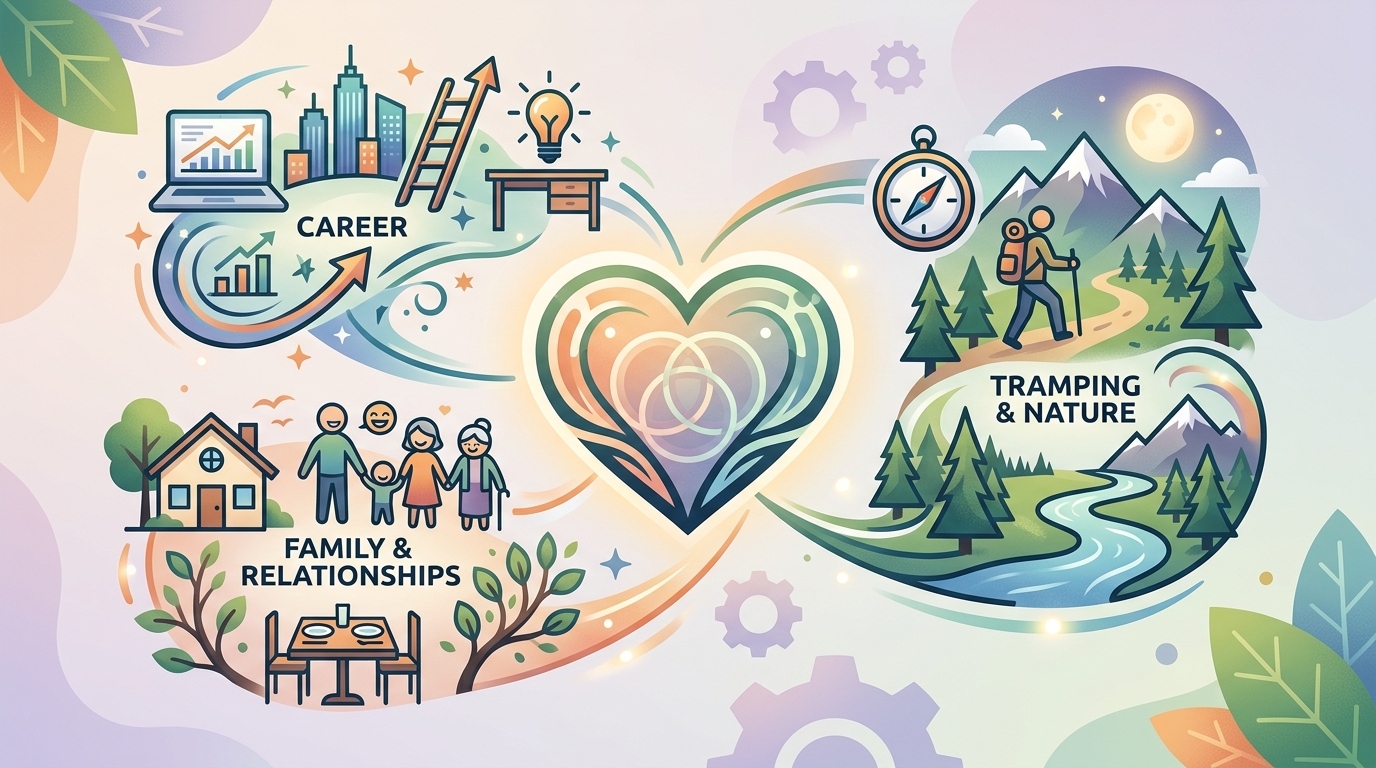
One of the biggest realisations at this stage is that your time is a finite and precious resource. Between demanding jobs in the CBD, school sport runs on Saturday mornings, or perhaps just the desire to spend your Sunday tramping in the Waitākeres, you are likely more selective about who you spend your evenings with. This isn't being "fussy"—it’s being intentional. You are no longer dating to fill a void; you are dating to add value. This shift in priority means that emotional availability, kindness, and shared values often move to the top of the list, while superficial traits like "the right look" or "the perfect job title" start to carry less weight.
The Evolution of What Matters: From Spark to Substance
When you were younger, the thrill of the chase or the mystery of a "bad boy" or "cool girl" might have been enough to sustain a few months of dating. By 40, most of us have lost the appetite for games. The "drama" that felt like passion in your 20s now just feels like an unnecessary drain on your energy. Instead, there is a growing appreciation for the "quiet virtues." Kindness, reliability, and emotional maturity become incredibly attractive. There is a deep sense of security that comes from knowing that if a partner says they will call, they actually do. This reliability is the foundation upon which trust is built, and in your 40s, trust is non-negotiable.
Previous relationships—the ones that soared and the ones that crashed—serve as an invaluable classroom. They have taught you what you genuinely need versus what you thought you wanted. You might have realised that while you always thought you needed someone "spontaneous," what you actually need is someone who understands the importance of a routine. Or perhaps you’ve learned that "intellectual connection" is far more important to you than "shared hobbies." This self-awareness allows you to communicate your needs much earlier in the piece. You are less likely to hide your true self to please someone else, which leads to more honest and authentic connections from the very first date.
- Emotional Compatibility: Do they have the tools to handle disagreement without shutting down?
- Lifestyle Alignment: Do your visions for the future—whether that involves travel, retirement, or blended families—actually mesh?
- Mutual Respect: Is there a fundamental appreciation for who you are as an individual, including your past and your commitments?
- Communication Style: Can you talk about the "hard stuff" (like finances or boundaries) without it turning into a battle?
However, there is a fine line between having healthy standards and becoming too rigid. It is easy to develop a "checklist" based on past hurts, but being too fixed can mean missing out on someone wonderful who doesn't fit your "type." For example, you might have always dated people with high-pressure corporate careers, only to find that someone with a completely different lifestyle—perhaps a teacher or a creative—actually brings the balance and perspective you’ve been missing. The goal is to be firm on your values (like honesty and respect) but flexible on the packaging. Stay open to the idea that your "person" might look a bit different than the image you’ve carried in your head for twenty years.
Navigating the Practicalities of Modern Kiwi Life
Dating in your 40s doesn't happen in a vacuum; it happens in the middle of a life that is already quite full. For many New Zealanders in this age bracket, "The Sandwich Generation" experience is real—you might be balancing the needs of growing children with the increasing needs of aging parents. This reality means that "lifestyle fit" isn't just a buzzword; it’s a logistical necessity. A relationship that requires you to abandon your existing responsibilities or routines is unlikely to last. Instead, a successful partnership at this age often feels like two independent lives weaving together in a way that makes both stronger.
This independence is something to be celebrated. By 40, you’ve likely established your own home, your own traditions, and your own circle of close friends. You have a "life" that you are proud of. A healthy relationship should complement this, not replace it. It’s about finding someone who respects your need for space and your existing commitments. Discussions about the "pace" of a relationship—how often you see each other, when to meet the kids, how much time to spend with each other's families—become essential. These aren't just "serious" talks; they are the building blocks of a relationship that actually works in the real world.
Safety First: When meeting new people online, always prioritise your digital and physical safety. Use official resources like Netsafe NZ to learn how to identify common dating scams and protect your personal information. Always meet in a public place for the first few dates and let a friend know your plans.
Avoiding the "baggage" trap is another key part of dating later in life. We all have history, but the trick is to carry your experiences as wisdom rather than as a shield. If a previous partner was unreliable, it’s natural to be cautious, but try not to project that expectation onto a new person. Give them the chance to show you who they are before you decide they are just like "the ex." This requires a certain level of vulnerability, which can feel scary when you’ve been hurt before, but it is the only way to build a genuine connection. Remember, a new partner isn't responsible for the wounds left by someone else.
Finally, be clear about your relationship goals from the start. Whether you are looking for a life partner to move in with, a "living apart together" arrangement, or simply a companion for weekend trips and dinners, there is no "right" way to do it. The beauty of dating in your 40s is that you get to define the rules. As long as you are honest with yourself and your potential partners about what you’re looking for, you can navigate this landscape with confidence. Changing your expectations isn't a sign of being "too picky"—it’s a sign that you finally know who you are and what you deserve.
Dating in your 40s can be one of the most rewarding times to find love. It is more grounded, more intentional, and often more honest than the dating of your youth. By embracing your self-awareness and prioritising compatibility over drama, you open the door to a relationship that doesn't just look good on paper, but actually feels good in your heart. You've done the work on yourself; now you have the chance to find someone who has done the same.